The All In One Creative Editor
The All In One Creative Editor
“Language is the technology from which all others spread, and you’ve already got it for free.”
— How To Invent Everything — A Survival Guide for the Standard Time Traveler
This language is strikingly visual, at first look.
6 short months is all it took to obliterate the distance between self-directed creativity and commercial reality.
On August 22nd, 2022, Stable Diffusion made its public debut. Even more recently, on November 30th, 2022, joined the fray. In the short time since our worlds have changed in deep and profound ways most of us haven’t grappled with yet.
The common thread isn’t obvious. It describes where we’ve been. How far we’ve come. How we got here. Where we are now… It even gives a glimpse of what happens next, and why human input, economic independence, and self-determination remain required, now more than ever.
Connecting all at once through encrypted, decentralized communication at a distance, persistent interfaces, new social platforms, creative AI synth models, and, while it’s early still, the start of a global restructuring of where manufacturing takes place — along with how it’s done, who has access, and who owns and operates the means of creation, consumption, production, distribution and commerce.
These are technologies that give our words more tangible power than thoughts and intentions alone. Not far away, at unapproachable scale, or theoretical any longer.
It starts with discoverability, through a blank canvas, and a simple button.
A New Way To Use FGO: AOP Templates
You can imagine how time consuming it would be to do all of this by hand. For aeons, the intricacy of patterns that could decorate and carry messages on fabric was limited by the small number of inks available, painstaking artisanal skill with needle and thread and loom needed, how quickly dyes soaked into threads or applied on cloth after fabrication would decay, flake, and smudge, and sharp limits in expressiveness, constrained by what we would call resolution or fidelity today. There weren’t a lot of ways to arrange large dots or weave threads together, for a long time before very modern machines, to transfer all of what you might imagine onto your canvas of choice.
All Over Prints, made available in recent years by web-based Print on Demand services, promise to democratize creativity and reduce the upfront cost of inventory. But like so much else from the “sharing economy” and Web2.0 big tech era, there are critical bits missing.
One of those is scaffolding for the creative process. Of a kind where when we say removing barriers to the creative economy for everyone, it doesn’t just mean social media influencers with behind the scenes teams and ad budgets.
AOP templates, accessible as a mask for design placements, with a few simple button clicks in an all-in-one creative editor interface, might not seem like such a big deal. But sometimes the biggest changes rise from the smallest details. This initial AOP template collection is stored persistently, as SVGs, as a new building block for Flexible Garment Ownership. They will be available to test for yourself within The Dial’s upcoming beta release.
Sneak Peeks from The Dial Interface
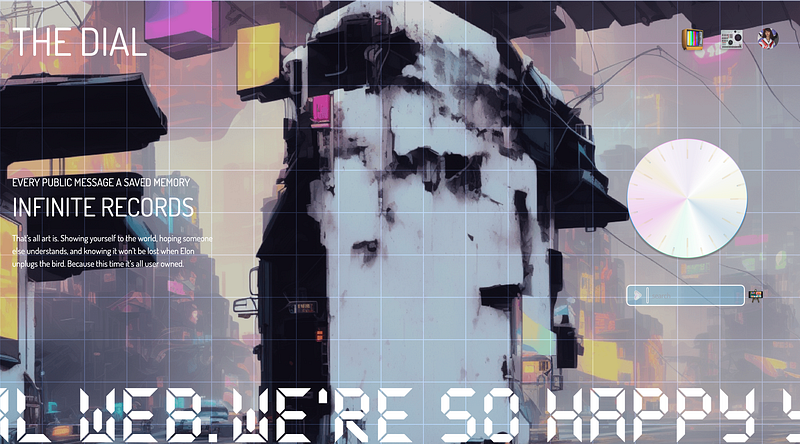
Landing & Search Scanner
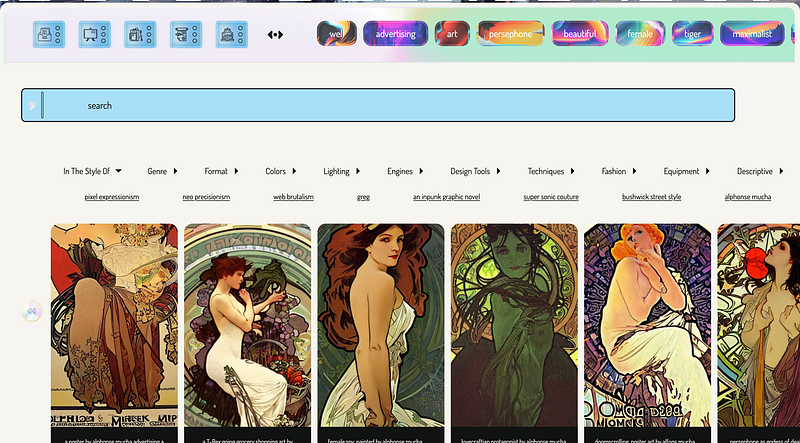
Inspiration & Curation Synth Search
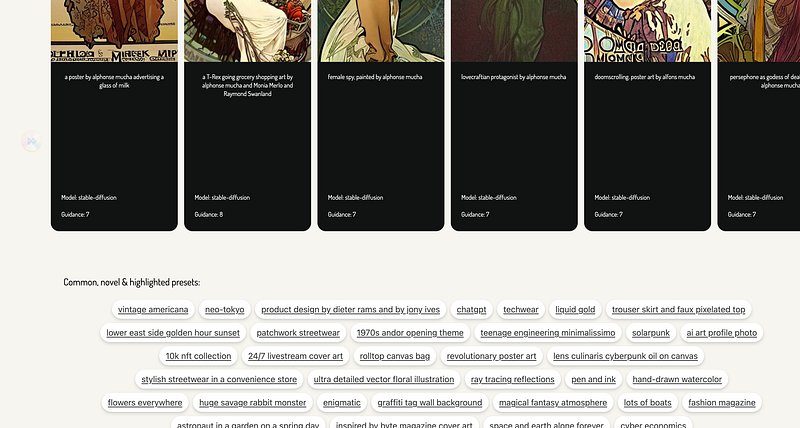
Synth and Preset Options
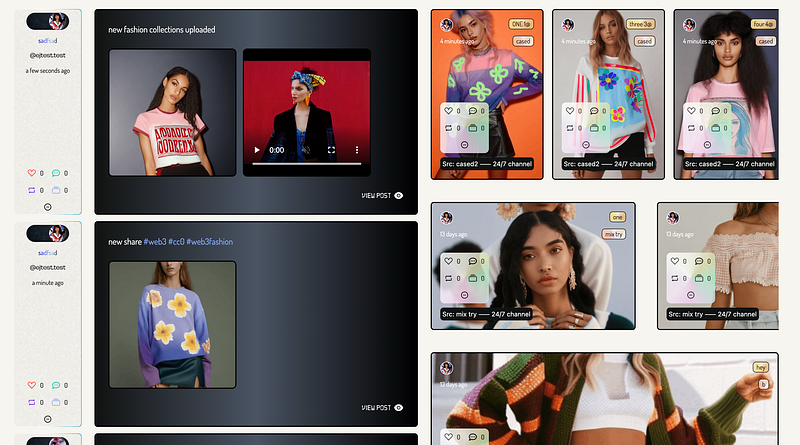
Post Feed Timeline
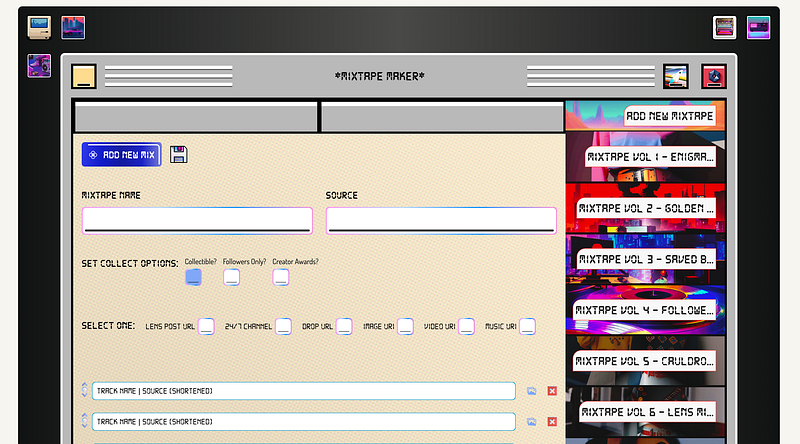
Curated Mixtapes Editor
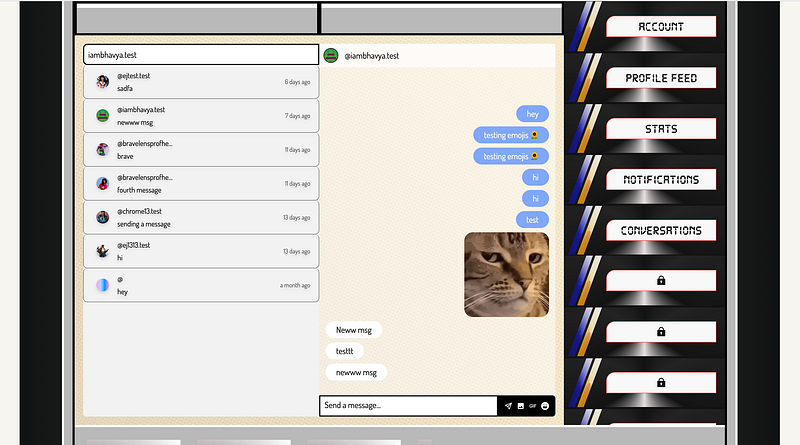
Xmtp Encrypted Direct Messages
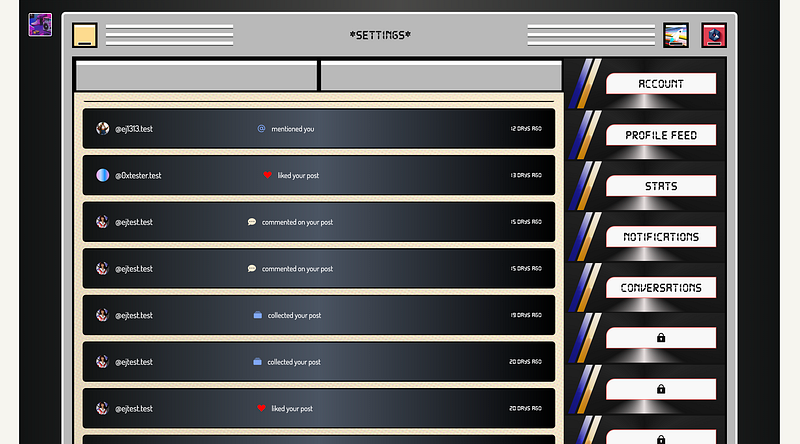
Account Notifications & Mentions
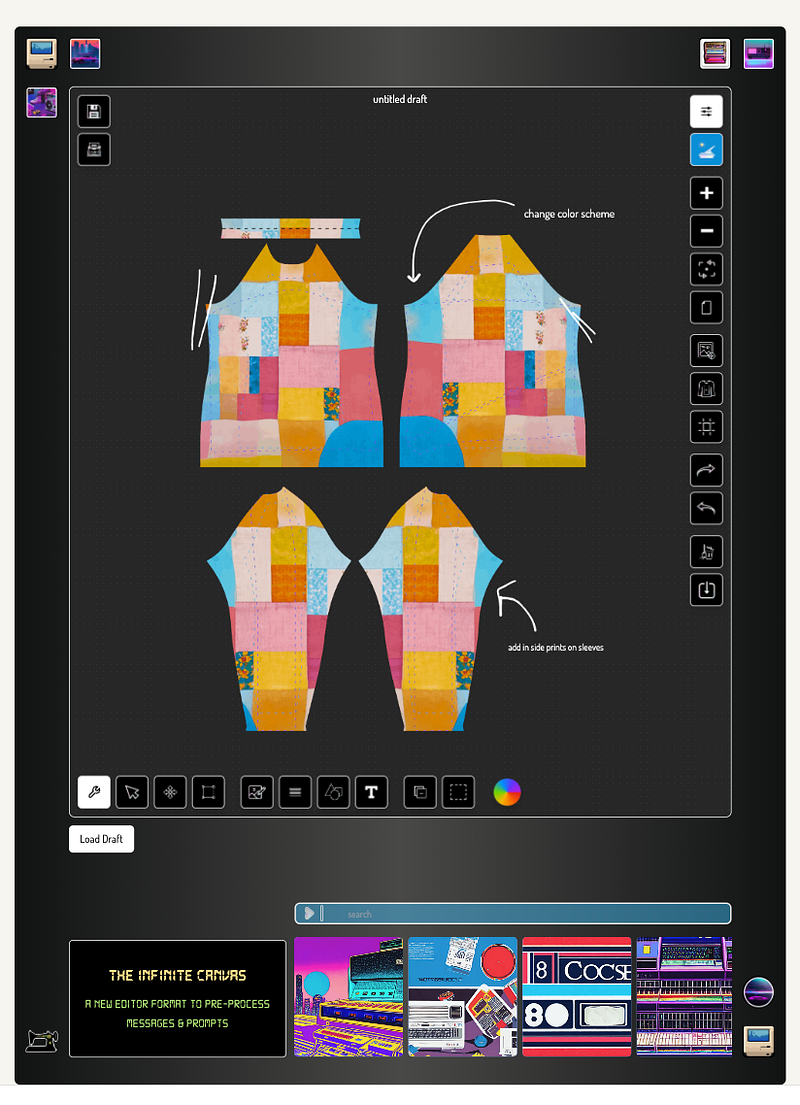
Custom Draw & Synth Canvas
A Multiplatform Interface for Creative AI
In keeping with the theme of collaboration between humans and AI, let’s ask ChatGPT what “an all in one creative editor” means:
“An “all in one creative editor” is a software application that provides a comprehensive and integrated set of tools for designing, editing and creating various forms of digital content, including images, graphics, videos, audio, and text. This type of software aims to provide a unified platform that allows users to perform all necessary tasks for content creation within the same application, eliminating the need for multiple separate tools.”
If you’ve seen or used a plugin for Stable Diffusion integration into Photoshop, Figma, etc, you get it. What’s missing from this current available crop of AI enhanced design editor apps and interfaces is a bit of a trilemma.
• Most of them are proprietary, kept exclusive to a self styled creative elite behind expensive price walls, with a history of arbitrary anti-user policies. The power of latent synth and large language models is too great to not be persistently open source and available for all to run on your own machines. Local or virtual.
• Even the open source options are very limited. You wouldn’t depend on MS-Paint to deliver the kinds of features and UX you’d expect in Affinity or Sketch. Even open source design apps that have been competitive alternatives to paid tools for years weren’t built with the unique capacities of AI in mind. Content discoverability, promptcraft, the dynamism of what makes editing different in a synth machine process, guidance on how to make use of growing access to GPUs through compute APIs, web3 commerce, and content collectability…
• It all demands a new approach to interfaces and apps, from the start.
• One made by creators, for creators, and where “ creators” includes the vast masses of consumers who never thought they could gain equal access to the means of creation, production and trade.
• You can’t really use them effectively, wherever you want to go. Older creative editors have too many legacy users, niche use cases, and internal stakeholders who defend their patch of product territory against market innovation. This usually leads to overengineered, stale and bloated code.
• In contrast, The Dial is the first of three releases that can best be understood as facets of an all in one creative editor solution. A Rust based desktop version and a Blender plugin are also in development.
You Don’t Realize You Need Decentralized Social, Until You Do
Let’s check in with ChapGPT again:
“The saying “You don’t realize you need decentralization, until you do” means that people often do not understand the importance of having a decentralized system until they face problems with a centralized system. Decentralization is a key principle in which power and control are distributed among many actors instead of being held in a single central authority. It is usually only when a centralized system fails, becomes compromised, or is no longer able to meet the needs of its users that the benefits of decentralization become clear.”
The Dial is a web3 social + creative AI canvas, built on Lens Protocol. Bet you didn’t know you needed that, yet.
With it, you can do all of the usual read, publish, react, follow, mirror, and collect activity you would expect on a Lens based network. You can also discover content made with Stable Diffusion, use secure private messaging via XMTP, and own your social graph.
There are a few things about it that give it a different focus from the other decentralized social apps we know and love. The most important (and obvious after reading this far) is the integrated canvas. You can create new designs, images, and even fashion styles from within the editor and publish them as future memories on your timeline. This is where the AOP templates button lives.
What Does This Mean for the Web3 Fashion Ecosystem?
DIGITALAX builds, in the public domain, everything needed to shorten the distance between discovery, creation, production, and commerce. Fashion is what brings us all together. If it weren’t for decentralization, none of it would be possible.
With these new releases we are expanding opportunities for creators anywhere online (and increasingly IRL) to make independent use of web3 fashion NFTs, tokens, and all of the tools we’ve made available up until now, within the ecosystem and beyond.
It is still early in web3, and the metaverse feels less hyped than it did a year ago (although that’s likely to change again soon).
That said, we’ve just seen in the last 6 months what happens when a technology that has everything it takes to transform every industry, but isn’t yet really understood by enough people in good faith, “suddenly” crosses its unique usability threshold and takes off.
The Stable Diffusion developer ecosystem practically caught up with Ethereum in just 90 days. ( https://twitter.com/PeterDiamandis/status/1595495173030612992 )
ChatGPT is the fastest product ever to hit 100 million users. ( https://arstechnica.com/information-technology/2023/02/chatgpt-sets-record-for-fastest-growing-user-base-in-history-report-says/ )
Unbundling the longest running technology industry in human history (starting anywhere from 40,000 to 3 million years ago, depending on how you cut and thread it), remains the most foundational and accessible path to market success aligned with user owned, self-directed, open source, and explicitly cypherpunk principles imaginable.
( https://en.wikipedia.org/wiki/History_of_clothing_and_textiles )
Hyperlocal Autonomation (or, Jidōka Co•ops)
A bit more about history. You probably already know something about punch bands, punched cards, Bouchon, Jacquard, Babbage, Lovelace, and how the history of modern computing is interwoven with fashion production technology.
https://en.wikipedia.org/wiki/History_of_computing_hardware
It’s the connections between these two extending into a third category of machine use that isn’t talked about enough. Modern manufacturing owes a lot to textiles and automation.
One of the most interesting and useful stories we can learn from is where Toyota, and its manufacturing methods, came from.
In 1926, Sakichi Toyoda founded the Toyoda Automatic Loom Works, a transformative force in the development of automated looms. He’s remembered as one of the leaders of the Japanese industrial revolution and one of the most impactful technologists (or people in general) in Japanese history, with far reaching relevance to manufacturing of textiles, machines, and motor vehicles of all kinds.
https://www.toyota-industries.com/company/history/toyoda_sakichi/
Autonomation, known also as Jidōka, owes its start to Toyoda’s (and later Toyota’s) efforts to improve efficiency, reduce waste, and empower human workers in the closest position to solve problems in the production process as they happen (Just In Time). It can be described as “automation with a human touch”.
At a time when manufacturing is going through a global reshoring, decentralization changes the viability of production at hyperlocal scales, and AI is quickly integrated into everything, we don’t need to reinvent the wheel to keep human creators in the loop. Instead, continuing to obliterate the barriers to creation, production, and commerce for self-coordinating web3 creators will benefit from a deeper look at Jidōka in practice.
You can look forward to it being a thread we come back to often as more support for latent, virtual, and IRL microfactory co•ops is developed within the ecosystem.
A New Collection Release Just In Time for NYFW

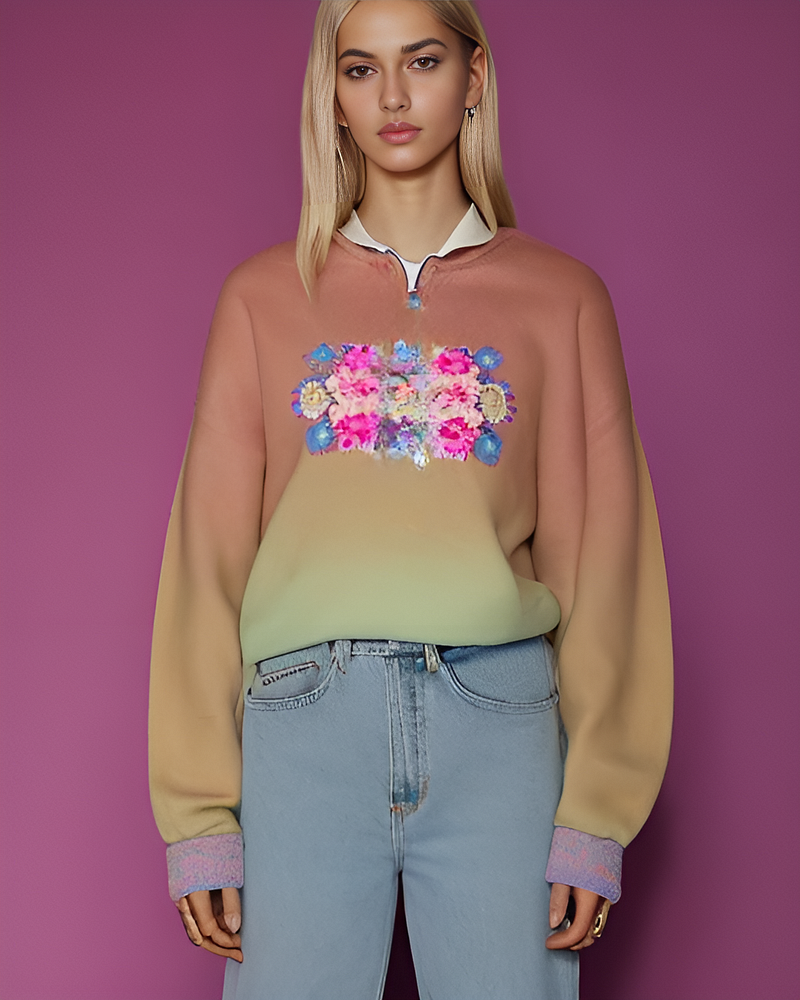
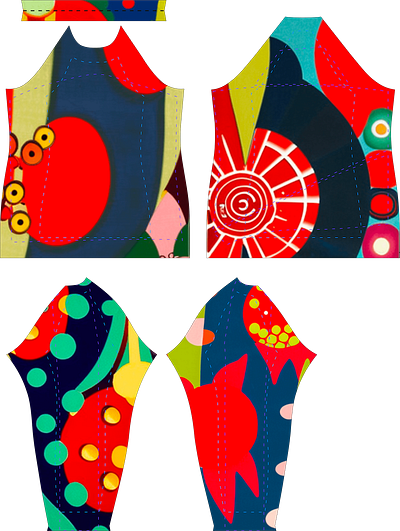
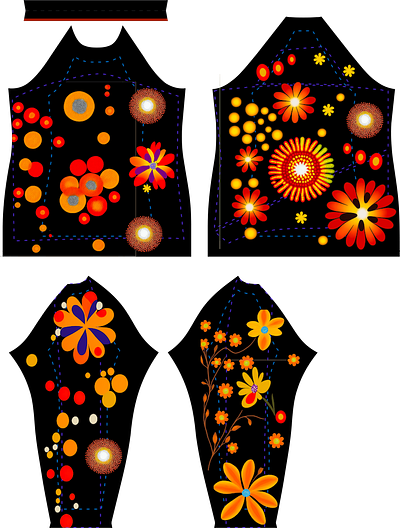
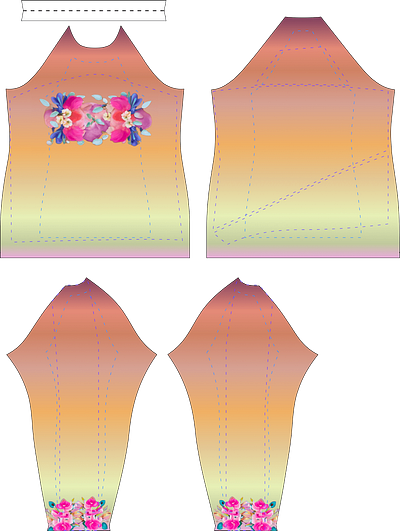
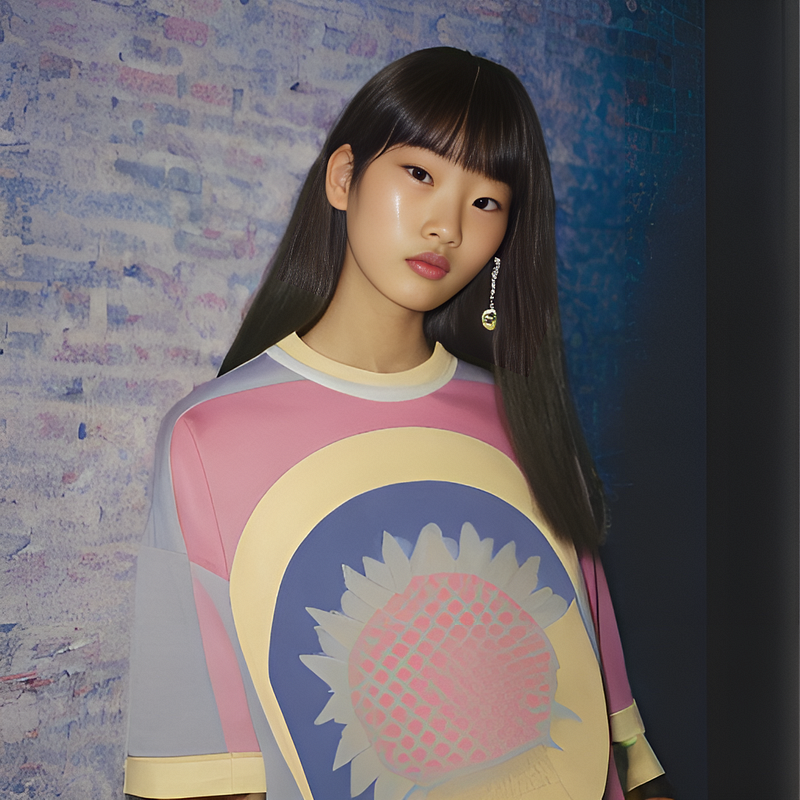
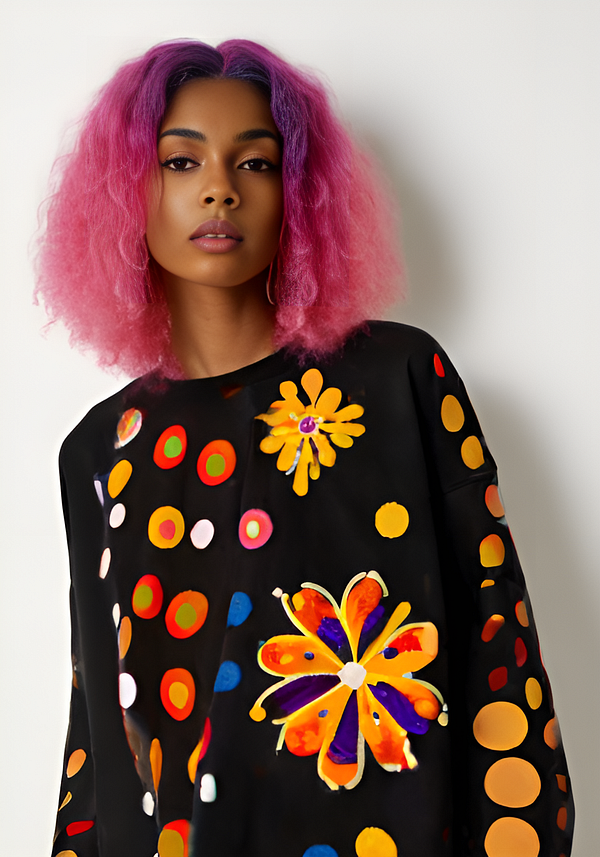

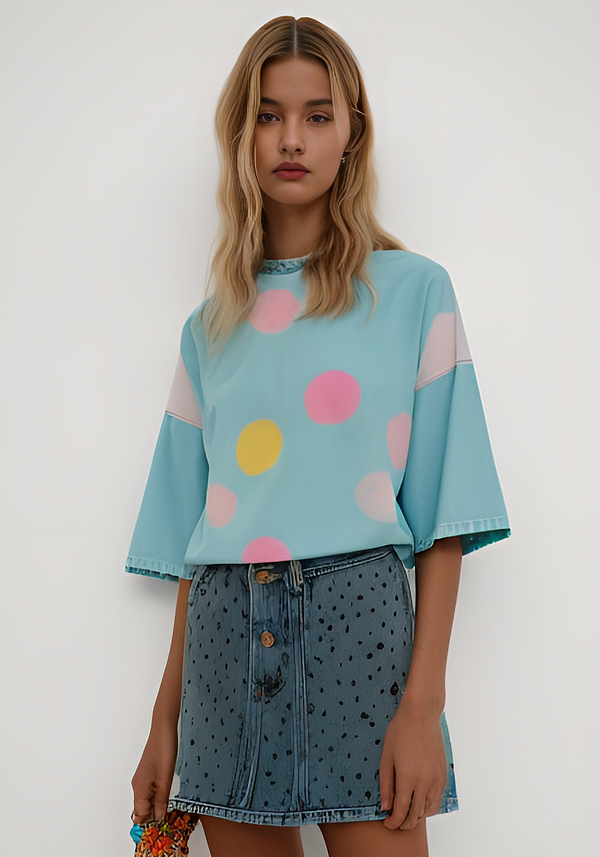
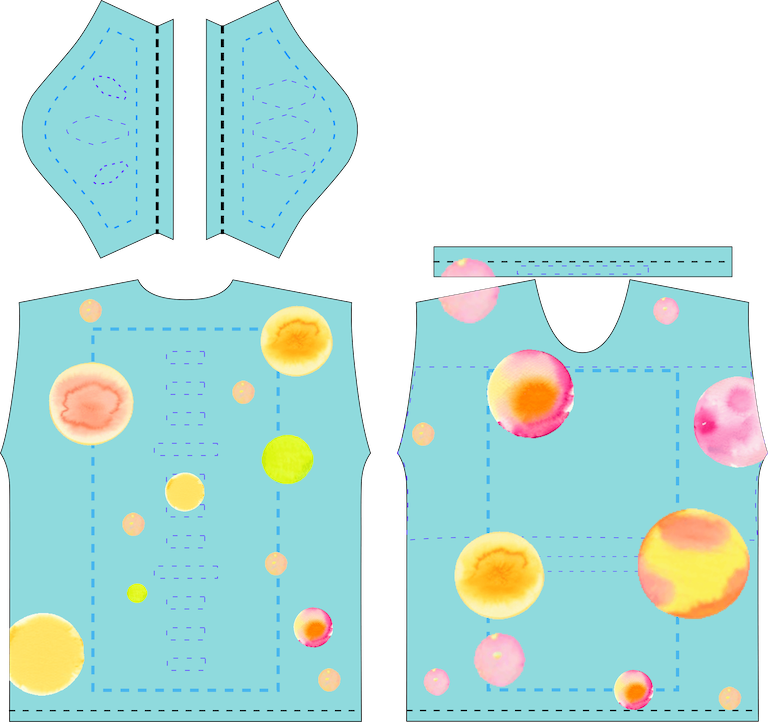
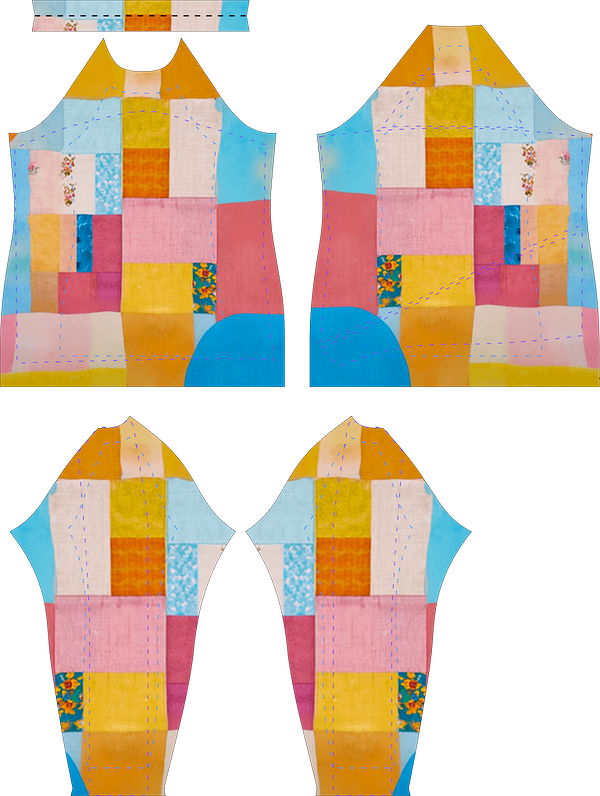
Featuring 23 unique looks that showcase a variety of all-over-print hoodies, shirts and tees, this latest collection of cc0 web3 fashion translates these synths into AOP on-chain FGO SVG templates for streamlined fulfillment and physical production — a process to be revealed with the beta release of The Dial and its canvas feature.
The complete Jidōka Imprint collection can be previewed with templates in hand on the DIGITALAX flagship site, coinciding with the start of Fashion Week, and featured in the new 24/7 latent looks streams across the DIGITALAX and F3M channels.
Stay Up to Date with Web3 Fashion:
• Lens
• Github
• Flagship
• Docs